A Slow Living Mindset Shift
There’s a specific kind of guilt that shows up when you sit down.
You make tea, grab a blanket, open a book or a show—and immediately hear the mental list: you should be doing something else. Cleaning. Answering messages. Working on the thing that’s been quietly haunting the back of your mind.
We’ve been taught that stillness is suspicious. Comfort is suspicious.
Cozy, especially, gets framed as frivolous: candles, blankets, soft clothes, warm light—nice, but unserious. Something you earn after you’ve been productive. Something that lives at the edge of “lazy.”
But what if that’s backwards?
What if cozy isn’t lazy at all?
What if choosing comfort is actually choosing what lasts?
This is a reframing of cozy living mindset, slow living philosophy, and intentional rest—not as a retreat from your life, but as infrastructure for the life you’re trying to build.
1. The Lie We’ve Been Taught About “Lazy”
Most of us grew up in some version of hustle culture, whether it was named that or not. We learned, quietly and repeatedly, that:
- Discomfort builds character.
- Productivity equals virtue.
- Rest is a reward you get after you’ve done “enough.”
“Lazy” stopped being a neutral description of energy levels and became a moral failure. A character flaw. Something you do not want to be called.
So cozy got lumped in with that.
- Cozy as indulgent.
- Cozy as unserious.
- Cozy as something you “treat yourself” to when everything important is done.
And if you’re socialized as a woman, there’s an extra layer:
You’re expected to be productive and pleasant. To manage care work, emotional labor, schedules, homes, feelings—often invisibly. Rest becomes something you “earn” only when everyone else’s needs are handled.
No wonder sitting on the couch with a blanket feels loaded. No wonder lighting a candle on a Tuesday afternoon can feel like you’re doing something wrong.
You’re not.
You’re just bumping up against a story that was never designed with your well-being in mind.
2. Cozy Is Regulation, Not Just Aesthetic
Cozy isn’t just “vibes.” It’s nervous system design.
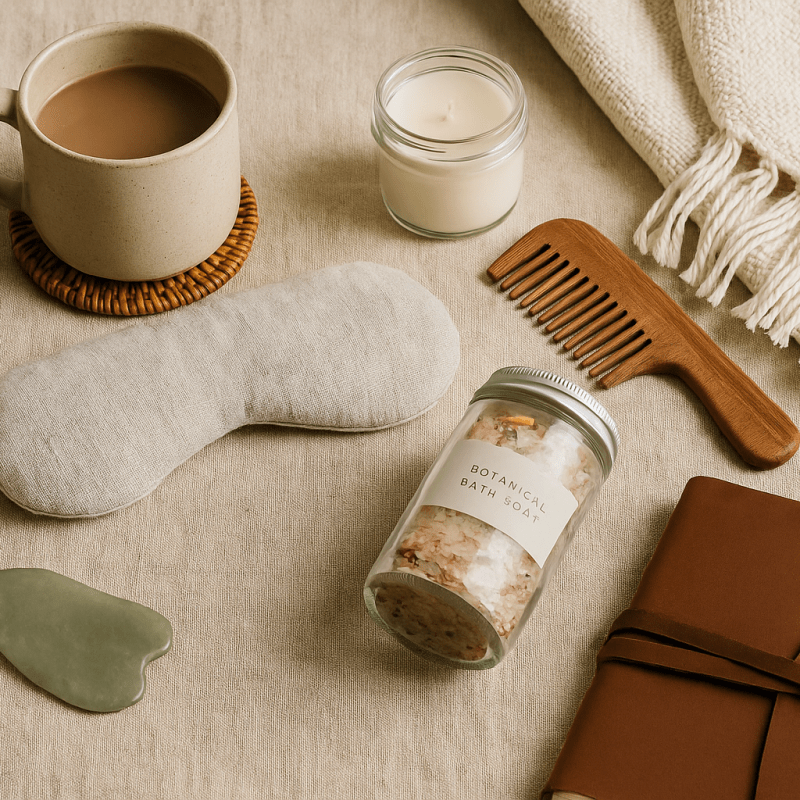
Yes, it can look like warm blankets and soft socks and a candle that smells like vanilla and first snow. But underneath that, cozy is about creating conditions where your body can stop bracing for impact.
Cozy looks like:
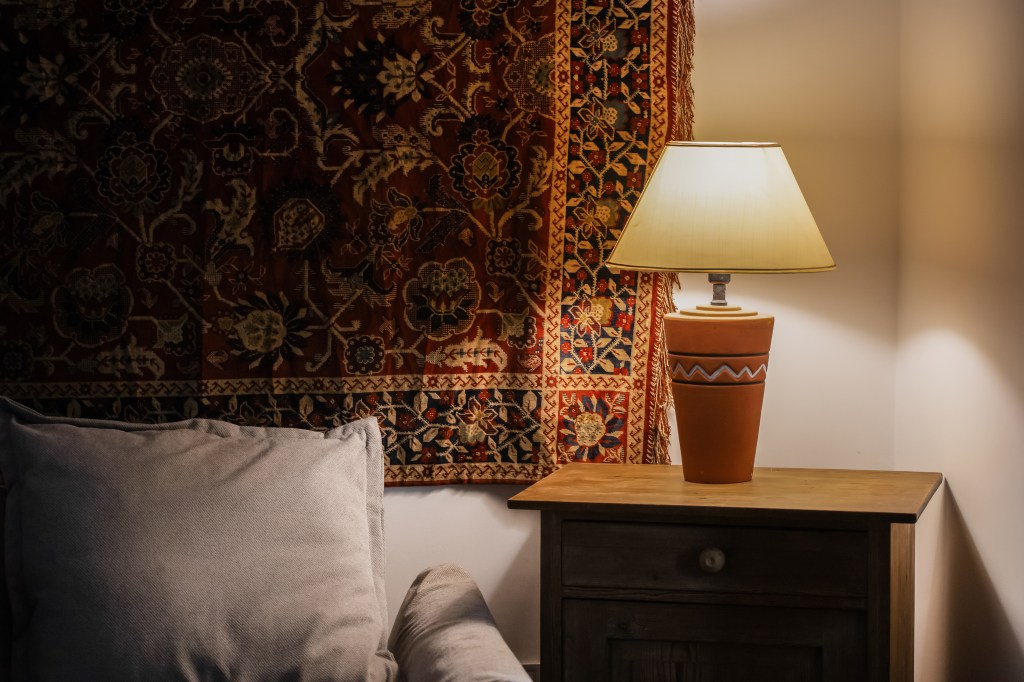
- Choosing warm, gentle lighting over harsh overheads so your body stops thinking it’s in a hospital waiting room.
- Wearing clothes that don’t dig, pinch, or distract, so you’re not in a low-grade fight with your outfit all day.
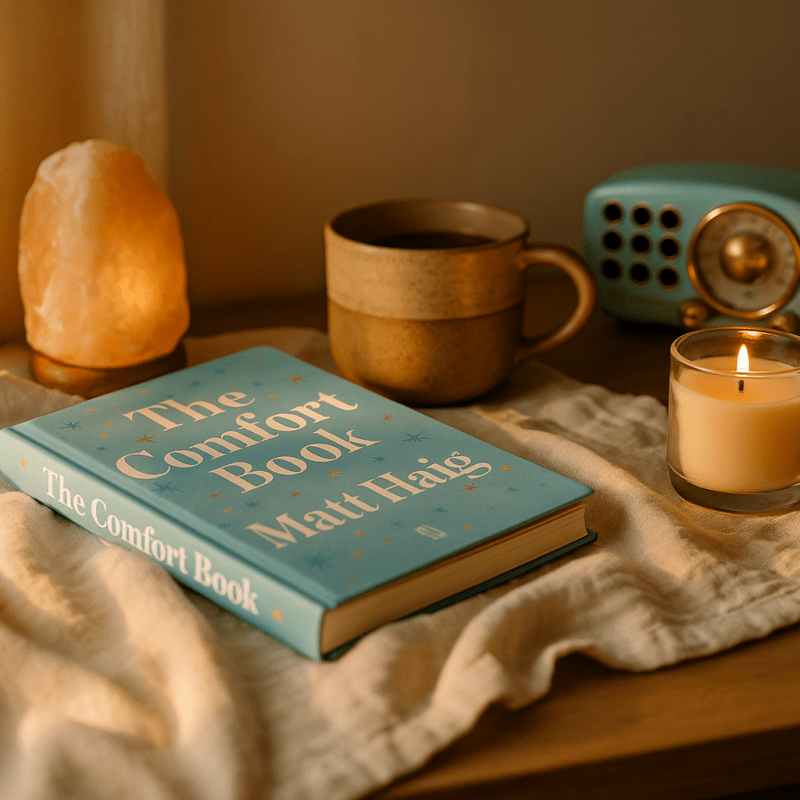
- Keeping a mug, a book, or a small comfort nearby so your system knows breaks are available, not prohibited.
- Designing your days with pockets of slowness instead of stacking tasks until bedtime.
Let’s name it clearly:
What cozy isn’t
- Cozy ≠ avoidance
- Cozy ≠ stagnation
- Cozy ≠ checking out forever
What cozy is
- Cozy = choosing an environment where your nervous system can downshift
- Cozy = reducing friction so you can show up with more presence
- Cozy = building a life that doesn’t feel like constant impact
Cozy isn’t the opposite of ambition. It’s the context that makes ambition sustainable.
3. Why Hustle Culture Fears Cozy
Here’s the unromantic part: a rested, regulated person is harder to exploit.
Hustle culture works best when you’re:
- Exhausted enough to say yes to everything
- Uncertain enough to buy every solution
- Tired enough to mistake busyness for worth
- Distracted enough to never ask, “Is this actually working for me?”
Burnout keeps people reactive, not reflective.
Constant urgency keeps you making short-term decisions.
Perpetual exhaustion keeps you from questioning the system you’re inside.
But cozy slows you down just enough to notice:
- “I’m actually doing too much.”
- “This job is draining me.”
- “I don’t want my entire life to feel like a to-do list.”
That’s a problem for any system that thrives on overwork and self-neglect.
So cozy gets trivialized.
Rest gets framed as laziness.
Softness gets dismissed as weakness.
But the truth is:
Cozy isn’t rebellion. Cozy is resilience.
You’re not “rebelling” because you lit a candle and sat down. You’re quietly building a life that can withstand more than one season.
✨ Want more cozy mindset shifts like this?
If “cozy isn’t lazy” feels like the permission you’ve been needing, you’re in the right place. I share gentle essays on slow living, intentional rest, and building a life that doesn’t run on burnout—all through the Cactus Rose newsletter.
4. Rest Is Infrastructure, Not a Reward
If rest were truly “lazy,” high performers wouldn’t need so much of it.
- Athletes build rest days and deload weeks into their training.
- Writers and artists talk about incubation time—thinking, reading, walking—being as important as output.
- Good problem-solving happens when your brain has space, not when it’s flooded.
Rest is infrastructure.
It’s not the sprinkles on top of a productive week. It’s the flooring underneath everything you try to do. Without rest, things crack:
- Focus gets choppy.
- Creativity dries up or becomes frantic.
- Tiny tasks feel impossible.
- You start “doom scrolling” instead of doing anything.
Rest isn’t lazy—it’s infrastructure.
If your body literally requires sleep, downtime, and comfort to function… choosing those things isn’t a moral failure. It’s maintenance.
You are not a machine that occasionally malfunctions. You are a human who needs recurring fuel.
5. Cozy Supports Focus, Not Avoidance
There’s an idea that comfort makes you unfocused. That you need hard chairs, harsh light, and a little bit of misery to do good work.
Reality tends to look different.
You focus better when your body isn’t screaming in the background. Cozy, when it’s intentional, can be one of the best focus tools you have:
- Warm light vs. harsh overheads: softer light tells your nervous system you’re safe, not under interrogation.
- Comfortable seating vs. constant fidgeting: when your body isn’t in pain, your brain can stay with the task.
- Familiar rituals vs. decision fatigue: the mug, the playlist, the blanket—tiny cues that say, “We’re in focus mode now.”
Cozy doesn’t mean “I refuse to deal with my life.”
It means “I’m going to deal with my life from a regulated state, not from the edge of burnout.”
That’s not avoidance. That’s strategy.
6. The Gendered Weight of “Lazy”
“Lazy” is not a neutral word. And it’s not used evenly.
For many women and femmes, “lazy” lands on top of:
- Invisible care labor (cleaning, emotional support, planning, scheduling)
- Expectations to be endlessly pleasant and available
- The assumption that their time is naturally more “flexible” or interruptible
Rest, in that context, starts to feel like a crime scene.
- Lying down while dishes are in the sink? Lazy.
- Reading when there’s laundry? Lazy.
- Saying no to a social favor because you’re spent? Selfish, dramatic… and lazy.
Cozy living—soft blankets, slow mornings, intentional rest—pushes against that. It quietly suggests that your right to comfort is not earned by overextending yourself first.
The goal isn’t to accuse anyone. It’s to say:
If you feel weirdly guilty for doing very normal, human things like resting or making your environment gentle—you’re not imagining it. You’ve been carrying a cultural script that was never neutral in the first place.
You’re allowed to put it down.
7. Cozy as a Long-Term Strategy
We’re used to thinking of “soft” choices as short-sighted:
- The grind is long-term.
- The comfort is indulgent.
But when you zoom out, cozy is one of the most strategic things you can choose.
Cozy living supports:
- Burnout prevention – you’re less likely to crash if you’re not running at max capacity all the time.
- Emotional regulation – feeling safe in your space helps you respond instead of react.
- Creative longevity – you can keep making things when your life isn’t a constant emergency.
- Sustainable productivity – steady output beats sporadic, frantic sprints.
- Mental clarity – rest and comfort clear the fog; urgency tends to add to it.
Hustle burns hot and fast.
Cozy builds slowly and lasts.
Choosing cozy doesn’t mean “I refuse to work hard.” It means:
“I’m not willing to build a life I can’t actually live inside of.”
8. Choosing Comfort Is Choosing What Lasts
You are not behind because you rest.
You are not less worthy because you like your lights warm, your socks soft, your mornings slow, or your evenings quiet.
Choosing comfort is not giving up. It’s choosing what lasts:
- Longevity over urgency – you’re building something you can keep.
- Presence over performance – you want to be here for your own life, not just report on it.
- Depth over speed – you’d rather go deeper than faster.
- Care over punishment – you’re willing to support yourself instead of bully yourself.
You don’t have to earn cozy.
You don’t have to apologize for needing rest.
You are allowed to make your life softer on purpose—not as an escape, but as a foundation. The more regulated you are, the more clearly you can see what needs to change, what matters, and what doesn’t deserve your energy anymore.
So if all you do after reading this is:
- light a candle,
- put on the soft socks,
- sit down before you’re on the verge of collapse,
…know that it counts. That’s not laziness. That’s intentional rest. That’s you choosing to last.
And that is never a waste.
Stay soft, stay sharp, and stay entirely your own.
Written by the author of The Cactus Rose—a quiet collector of beautiful things and curator of cozy, useful finds.
Design, branding, and site aesthetics by JunieBug Designs — the creative studio behind The Cactus Rose.
🔗 Keep Exploring Cozy, Gentle Living
If this cozy living mindset shift helped loosen something in your chest, these Cactus Rose posts pair beautifully with Why Cozy Isn’t Lazy:

Slow Start January
Slow Start January is a gentle guide for easing into the new year without pressure. Explore a mindful new year reset that prioritizes rest, tiny anchors, soft structure, and honest capacity so you can move into January slowly, intentionally, and at a pace that actually fits your real life.
Keep reading
Non-Resolutions for the New Year
A softer alternative to New Year’s resolutions. This reflective guide explores non-resolutions, gentle accountability, sustainable habits, and energy-aligned routines that support real life. Designed for slow living, mindful productivity, and intentional resets that don’t demand perfection — only presence.
Keep reading
Slow Holiday Mornings
Slow Holiday Mornings is a cozy guide to building a winter morning routine without pressure. Discover tiny rituals—warm socks, kettle steam, loose-leaf tea, journaling, breakfast bakes, gentle games, and reading time—that make the in-between days feel calmer. Micro moments, not checklists. Presence, not productivity.
Keep reading
January Reset Essentials
This January Reset guide highlights cozy essentials that bring comfort, clarity, and calm to your space. Discover January essentials for a gentle new year reset—soft lighting, simple organization, supportive routines, and small home upgrades that make everyday life feel warmer, steadier, and easier to move through.
Keep readingSave one or two to read next, and let your life move at the speed of something sustainable—something you can actually stay inside, comfortably.









 The Cactus Rose
Leave a comment